During the Vietnam War, military wives were supposed to be polite, tidy, and quiet. But when their husbands went MIA, there were no rules for how to endure endless uncertainty, navigate red tape, or advocate for love in the face of bureaucracy. The League of Wives captures the courage of the women who did exactly that.
Written by Heath Hardage Lee, this historical nonfiction account follows women whose husbands were POWs or MIAs. They faced a reality no one had prepared them for: husbands far away, sometimes unaccounted for, and no roadmap for survival — much less advocacy — in a world that expected wives to remain compliant, polite, and invisible.
What began as a small circle of women sharing information and emotional support quickly grew into a powerful advocacy network. They fought to access news, financial resources, and government channels, all while navigating societal expectations. These women had no official guidance, no precedent, yet they invented rules as they went — and in doing so, changed the way America understood the home front in wartime.
The Unwritten Rulebook & Early Quiet Endurance
In the 1960s, military wives weren’t just spouses — they had jobs. Social hierarchy, hosting, decorum, and subtle political influence could affect a husband’s career. The “white gloves and pearls” approach was part of the work: tea parties, polite correspondence, and careful navigation of base politics.
When husbands went missing in action, the traditional rulebook offered no guidance at all. Wives faced endless bureaucracy, delayed salaries, and a society that expected them to endure quietly. Some had to get pushy just to keep mortgages paid or homes running. Many tried to follow the old model, hoping patience and politeness would smooth the way — but the reality was isolating and terrifying. These were just wives, fearful of the worst, unsure where to turn, and forced to invent their own path.
Even in quiet endurance, a seed of advocacy and resilience was taking root. Courage was constrained by social expectation, but it was there, growing quietly.
Transition to Advocacy
Quiet endurance wasn’t enough. Letters went unanswered, bureaucrats stalled, and polite persistence didn’t bring husbands home. Some wives ran into red tape so tangled that accessing paychecks became nearly impossible. A few had to push high-ranking officers just to make ends meet, all while caring for children and running households alone.
The Vietnam War stretched through Lyndon B. Johnson and Richard Nixon, and the wives had to navigate multiple administrations. They traveled the world, sought meetings with North Vietnamese delegates, and learned to exert pressure on powerful men — sometimes using the media to shine a light on political failures while maintaining dignity.
At times, they even partnered with antiwar activists, some with communist ties, to get letters or improve conditions for POWs. Initially, that felt like betrayal, but when a single letter could mean the world, doing whatever it took became a moral necessity.
Throughout it all, these women were non-partisan advocates. They weren’t lobbying for ideology — they were fighting for husbands and fellow wives. What began as fear and grief became strategic, relentless advocacy, a combination of negotiation, diplomacy, and courage, all while keeping households running and enduring uncertainty daily.
Homecoming
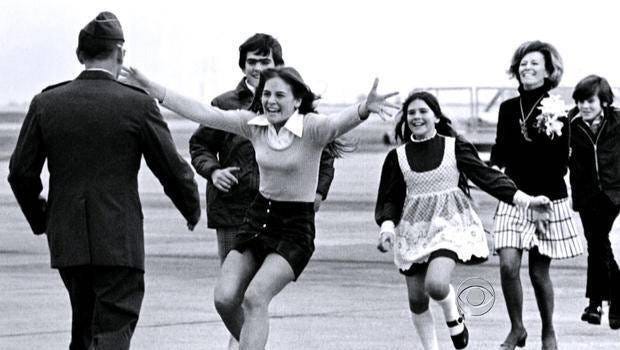
When POWs returned, emotions were complicated. There was joy — finally seeing husbands after years of uncertainty — but also grief and a sense of lost time: milestones missed, children grown, and years spent apart. Tragically, about two-thirds of the men never came home, leaving a shadow over the celebrations.
Those who returned were celebrated differently than many Vietnam veterans, who were sometimes ignored or shamed. POWs received parades, public recognition, and a toast from President Nixon, who referred to the wives as the “first ladies of America.” Homecoming was a mix of joy, grief, and reflection — a reminder that courage and resilience extend far beyond the battlefield.
The League of Wives redefined what it meant to be a military wife — and what women could do when they worked together.
- Courage & Persistence: They navigated bureaucracy, social expectation, and the terror of uncertainty. When sanctioned channels failed, they found a way forward — strategically, patiently, and relentlessly.
- Sisterhood & Solidarity: Traditional hierarchies were abolished. Instead, they became sisters on a mission, sharing knowledge, offering emotional support, and coordinating strategies.
- Redefining Love & Service: Love wasn’t just letters or waiting; it looked like lobbying, traveling, negotiating, and refusing to accept “no.” Leadership and advocacy became acts of devotion.
- Non-Political Unity: Crossing party lines, setting aside ideology, they focused on human and familial needs. Principled advocacy worked, without partisanship.
Their story reminds us that real bravery often happens off the battlefield, in quiet, strategic, and determined acts fueled by love and solidarity.
The Librarian’s Thoughts
Reading about the League of Wives hit me. Their courage wasn’t rebellious or flashy — they respected authority and followed the proper channels first. But when those channels failed, they found another way forward, together. That combination of patience, persistence, and creativity is what made them extraordinary.
It made me reflect on the unseen labor and emotional resilience in our own lives — keeping households running, advocating for loved ones, navigating challenges. Courage shows up quietly, and sometimes it means rewriting the rulebook when it no longer serves its purpose.
The sisterhood aspect resonates most. These women leaned on each other, shared strategies, and built networks stronger than any social expectation. Even in ordinary moments, we can advocate, persist, and care in ways that truly matter.
The League of Wives reminds us that courage isn’t always loud. Sometimes it’s quiet, persistent, and grounded in love. They followed rules, respected authority, and tried every sanctioned path — but when that wasn’t enough, they found another way forward together.
What small, unseen acts of courage have shaped your life — or inspired you to stand up, speak out, or support someone else in unexpected ways?
That’s all for now. Take care, stay curious, and I’ll see you next time 🌿


No comments:
Post a Comment